




In today’s complex security landscape, businesses often wonder if Network Access Control (NAC) and microsegmentation serve the same purpose. While both contribute to securing networks, they address fundamentally different problems. This blog aims to clarify these differences to help you make an informed choice.
Understanding NAC: What Does NAC Address?
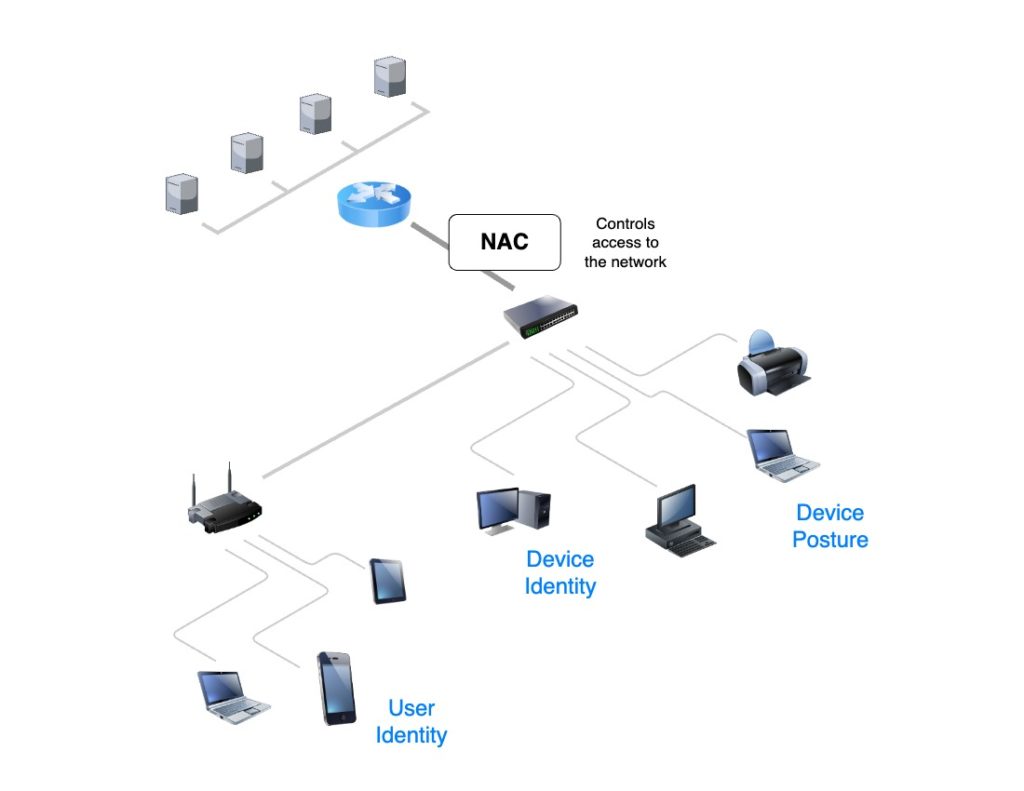
NAC is designed to regulate and control access to networks. It ensures that only authorized devices and users can connect, addressing the critical security need of preventing unauthorized access.
For example, hackers who gain physical entry to a business office may look for an unsecured Ethernet port to plug in malicious devices and gain unauthorized access to the network. They may use Wi-Fi cracking techniques to penetrate the wireless network if they are unable to gain physical access. In fact, penetration testing usually includes these activities to test the enterprise’s cyber defenses. NAC prevents such attacks by authenticating devices and users before allowing access, whether through physical ports or wireless networks.
Why Should Businesses Implement NAC?
NAC is highly effective for businesses with a physical or wireless network presence. The good news is that many modern network infrastructure vendors provide built-in NAC capabilities, reducing the need for additional tools.
However, NAC has its limitations:
- It ensures perimeter security but cannot protect against malicious insiders or attackers who have bypassed NAC controls.
- NAC cannot address threats moving laterally within the network (east-west traffic).
For example, if an attacker or malicious insider gains access to the network, whether by bypassing NAC controls through a supply chain attack, application vulnerability, or other means, the question arises: How do you protect your network from lateral movement?
This is where microsegmentation comes into play.
Understanding Microsegmentation
What Does Microsegmentation Address?
Microsegmentation enhances network security by creating micro-perimeters around applications and services, restricting attackers’ lateral movement even if they gain initial access. It enforces granular, adaptable security policies tailored to specific workloads, offering flexibility by abstracting network details into tags for dynamic policy enforcement without additional hardware. By focusing on east-west traffic, it aligns with modern security frameworks like Zero Trust, while real-time visibility and automation streamline policy management for greater efficiency.
NAC vs. Microsegmentation: Complementary Solutions
NAC and microsegmentation are not competing technologies but complementary ones:
- NAC: Protects the perimeter, ensuring that unauthorized devices cannot access the network.
- Microsegmentation: Secures internal traffic, preventing attackers from exploiting their foothold.
For businesses, the key is to identify their security priorities: Are you concerned about physical and wireless network access? Start with NAC.
Are you focused on preventing lateral movement and internal threats? Leverage microsegmentation.
A Real-World Example: ColorTokens’ Xshield™
ColorTokens’ Xshield™ platform exemplifies how microsegmentation can be effectively implemented. By leveraging native firewalls in operating systems, Xshield™ eliminates the need for dedicated hardware, significantly reducing deployment costs.
With Xshield™, businesses can:
- Enforce granular policies (e.g., limiting CRM web server access to specific databases).
- Gradually implement security measures, refining policies based on insights and evolving needs.
- Gain continuous visibility into network traffic flows to remain agile in a dynamic threat landscape.
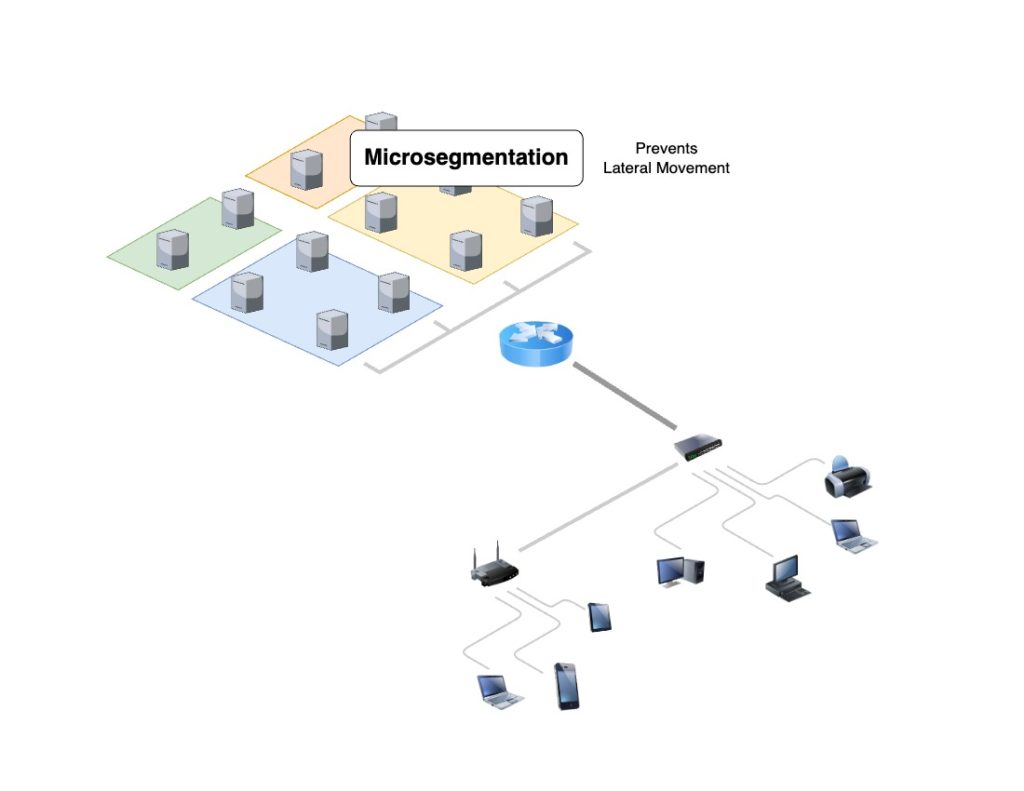
Example: Policies can be written to control traffic between a CRM web server and a CRM database server, creating micro-perimeters and reducing attack surfaces.
Conclusion: Embracing a Layered Security Approach
While NAC addresses external access control effectively, its limitations in protecting against internal threats are evident in today’s complex environments.
Microsegmentation fills this gap by enhancing internal security and aligning with Zero Trust principles. For organizations aiming to stay ahead of evolving threats, adopting both NAC and microsegmentation as complementary strategies is essential. Together, they provide a robust security framework for modern networks.
Contact us today to explore how a layered approach can protect your business from evolving threats.