




Every organization is effectively a digital one, making cybersecurity not just an option, but a necessity. With more investments in cybersecurity, businesses are increasing its digital footprint exponentially. However, we are simultaneously creating massive Gordian knots, intricate problems that can seem insurmountable.
The Digital Gordian Knot
Like the legendary Gordian knot, our digital networks have become complex and intertwined, creating labyrinths of interconnected systems. Unlike Alexander the Great, who could simply cut through the knot, we cannot sever our digital connections. Our challenge is to navigate this complexity without disrupting our operations.
Investments in digital systems are growing much faster than investments in cybersecurity, creating loopholes that cyber attackers are eager to exploit. The 2023 IBM Security Cost of a Data Breach Report highlights a grim reality: only 33% of breaches are identified by internal tools and teams. The rest are detected by external parties or go unnoticed, costing organizations millions.
The report reveals that when breaches are identified internally, organizations can save nearly USD 1 million compared to breaches identified by external parties. This stark disparity underscores the importance of robust internal cybersecurity measures.
The New Normal: Achieving Maximum Operations in a Minimum Viable Company
In the face of these challenges, the new normal should be achieving maximum possible operations in a minimum viable company. This means building an organization that is not only resilient but also agile and adaptable. Digital resilience is essential to operate a digital business, especially considering the rise in disruptions due to cyberattacks.
Let’s look at the perennial challenges of cybersecurity:
- Asset Management: Effective asset management is a continuous struggle, compounded by shadow IT.
- Patch Management: Timely patch management is often overlooked, leading to exposure risks.
- Configuration Management: Errors and lack of change control in configuration management pose significant threats.
- Human Error: The most unpredictable factor, human error, remains a major vulnerability.
The sobering reality is that attackers need only to succeed once, whereas our defenses must be unerring every time.
To Be Digitally Resilient, We Need to Stop Attack Proliferation
According to the CrowdStrike 2024 Global Threat Report, adversaries often aim to “break out” and move laterally within compromised environments. This critical period, known as the “breakout time,” is crucial because once attackers move beyond their initial entry point, they can cause widespread damage. To mitigate this, we must focus on the four stages outlined in the MITRE ATT&CK Framework:
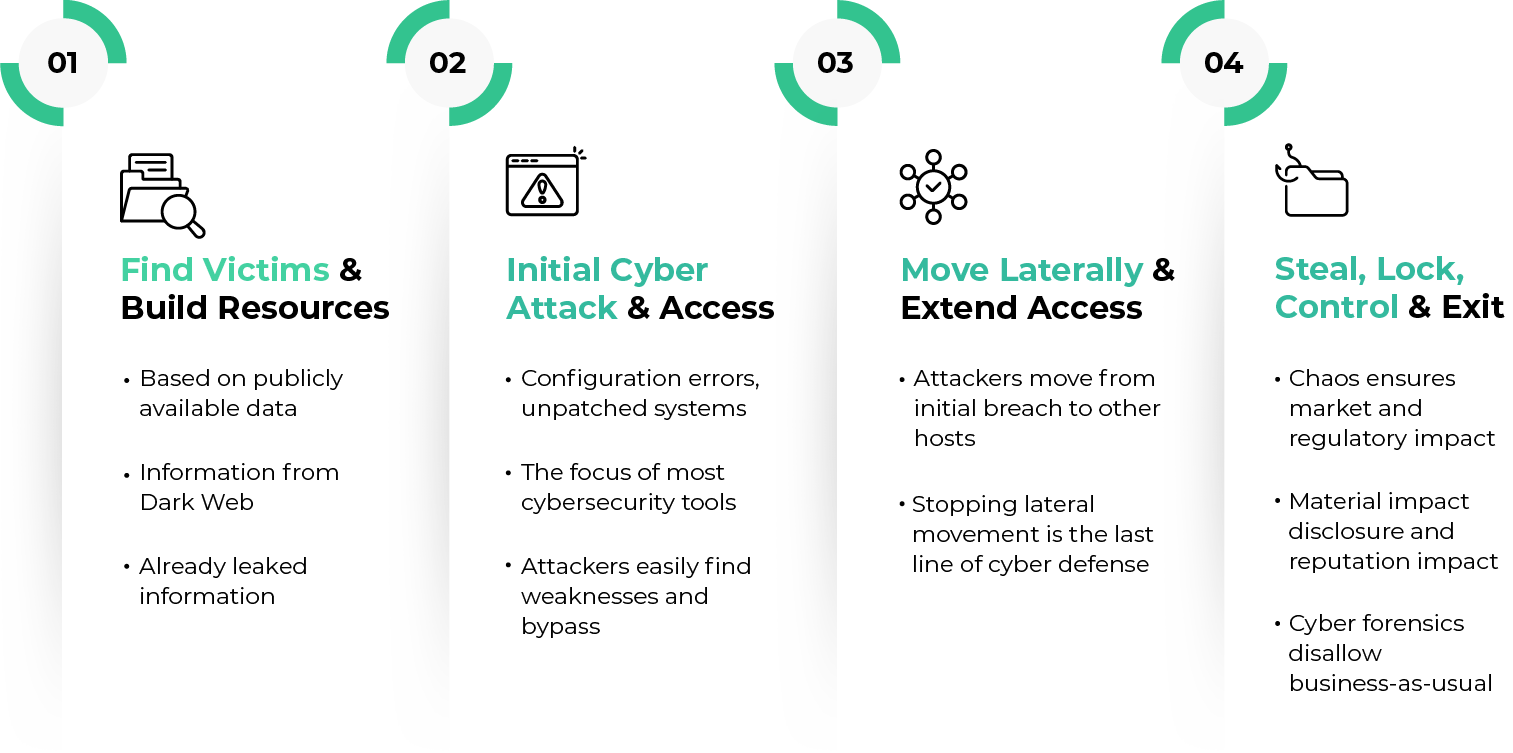
Each stage requires a proactive and vigilant approach to prevent attackers from achieving their objectives and to ensure our digital operations remain secure and resilient.
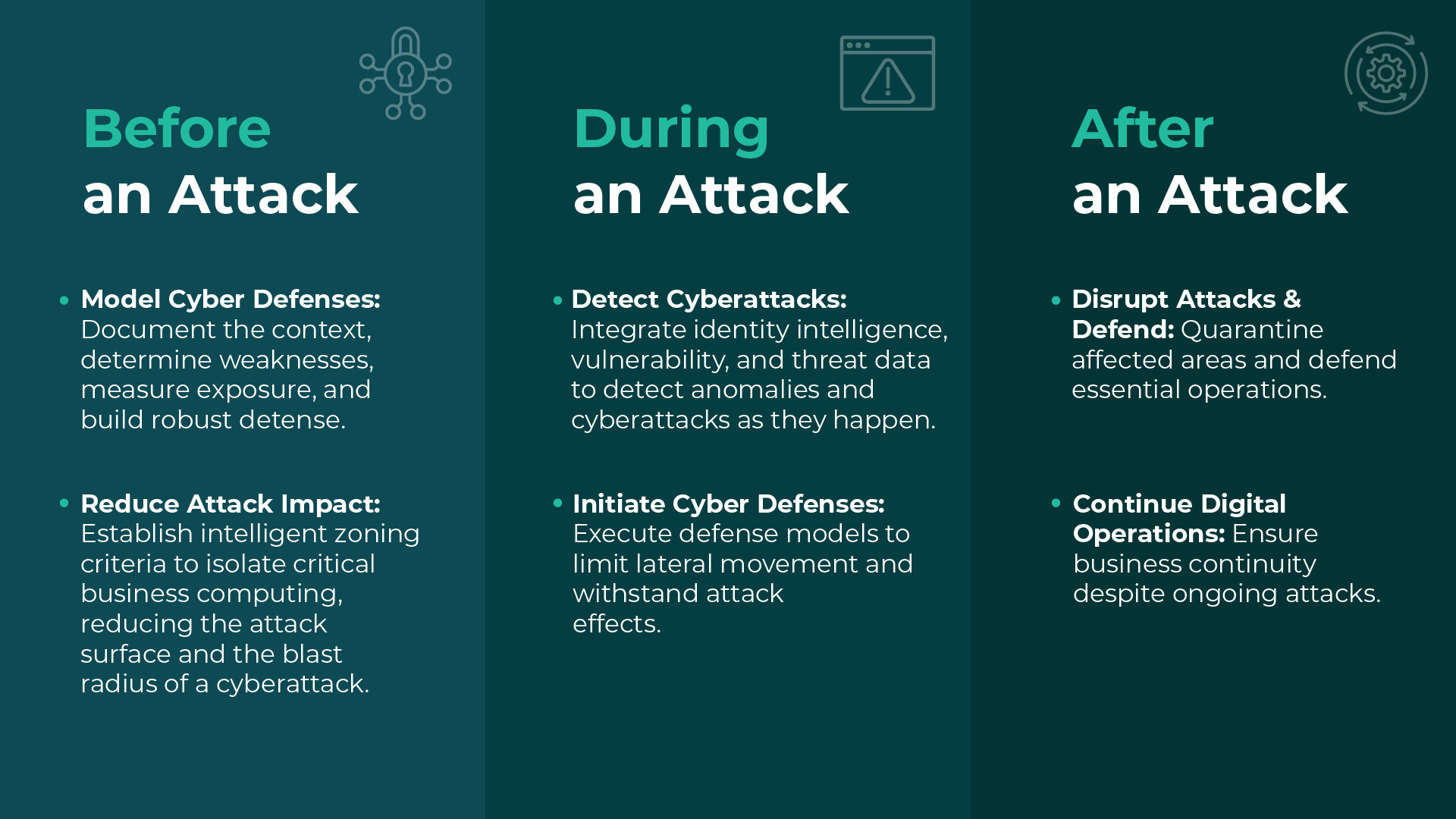
Arresting Lateral Movement: The Zero Trust Microsegmentation Approach
This strategy prioritizes arresting lateral movement within networks, significantly reducing the breakout time of cyberattacks. Here’s how we can break down the process:
Indicators of a Robust Digital Resilience Program
How do we know if our digital resilience program is effective? Here are eight parameters:
- Pervasive Defensibility: Ability to address all points of breach across IT and the cloud.
- Panoptic Visibility: Comprehensive visualization of gaps in cyber defense.
- Progressive Hardening: Continuous reduction of exposure and improvement of cybersecurity.
- Granular Quarantine: Effective quarantine of cyberattacks to minimize business impact.
- Model Defenses: Simplification of the computing landscape into defensible zones.
- Breach Ready Zoning: Segregation and isolation of zones to contain attacks.
- Attack Disruption: Establishment of maximum business continuity during attacks.
- Enable Industry 4.0: Defense of critical operations to ensure business continuity.
Microsegmentation and a New World of Digital Resilience
Microsegmentation is not new, but it provides essential capabilities for digital resilience. By quarantining cyberattacks within microsegments, organizations can ensure that up to 80% of operations continue unaffected, even during an attack. This strategic containment approach allows for up to 20% acceptable operational losses, ensuring that critical business functions remain unaffected.
Let’s remember that addressing the digital Gordian knot requires us to stay calm and move fast. Our journey towards digital resilience is not just about technology; it’s about people, processes, and a relentless commitment to improvement. We must ensure our digital operations remain steadfast, secure, and resilient.
To know more about breach readiness strategies, digital resilience, and microsegmentation, please contact us here.